
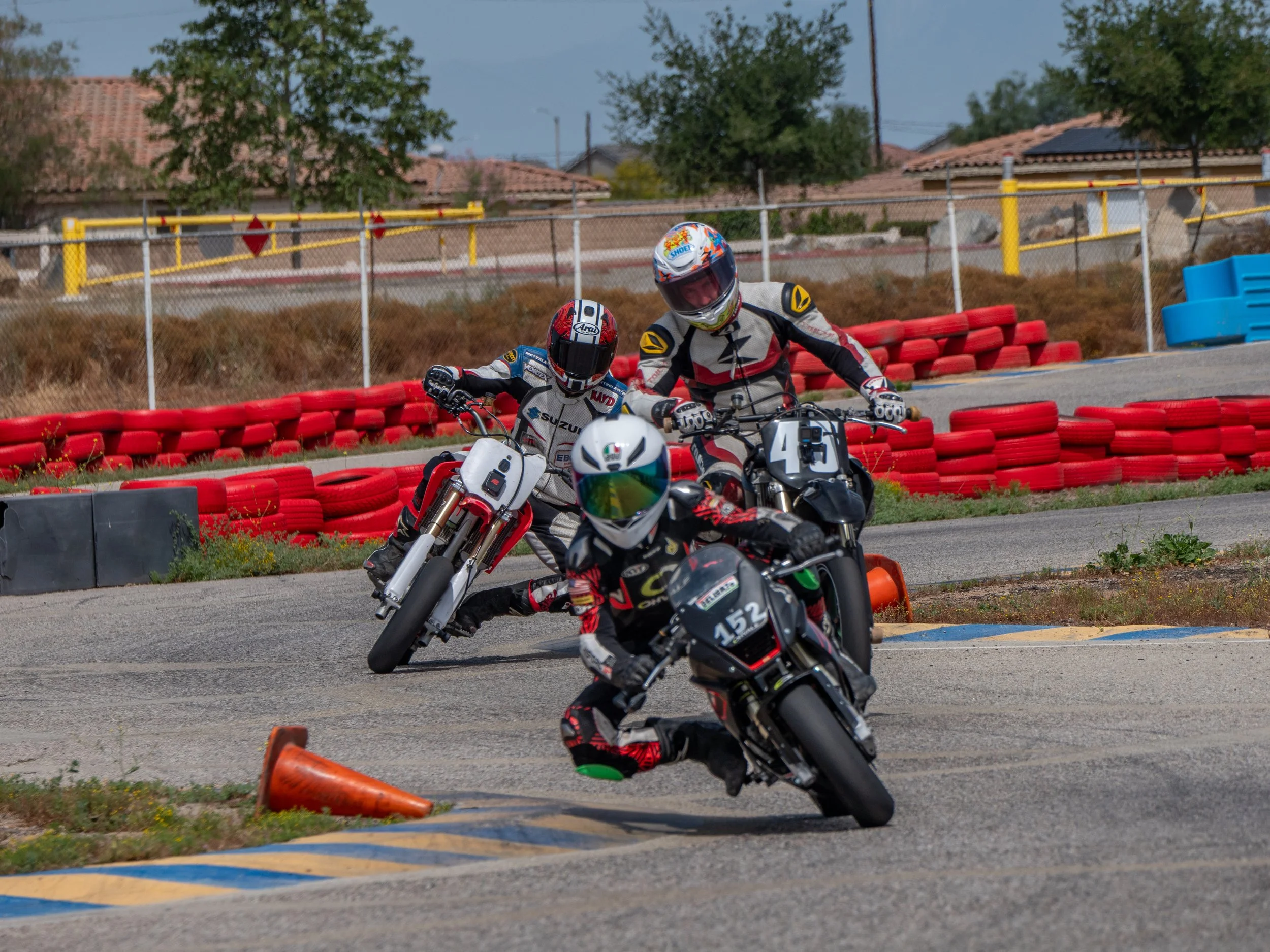
Morris Cup GP
October 9–11
Apex Motorsports Park
AMA Sanctioned Event

Morris Cup GP registration is live now
QUICK FACTS
DATE
October 9–11
LOCATION
Apex Motorsports Park
FORMAT
Practice • Qualifying • Sprint • GP Mains
BIKE Categories
Motorized Bicycle • MiniMoto • Supermoto
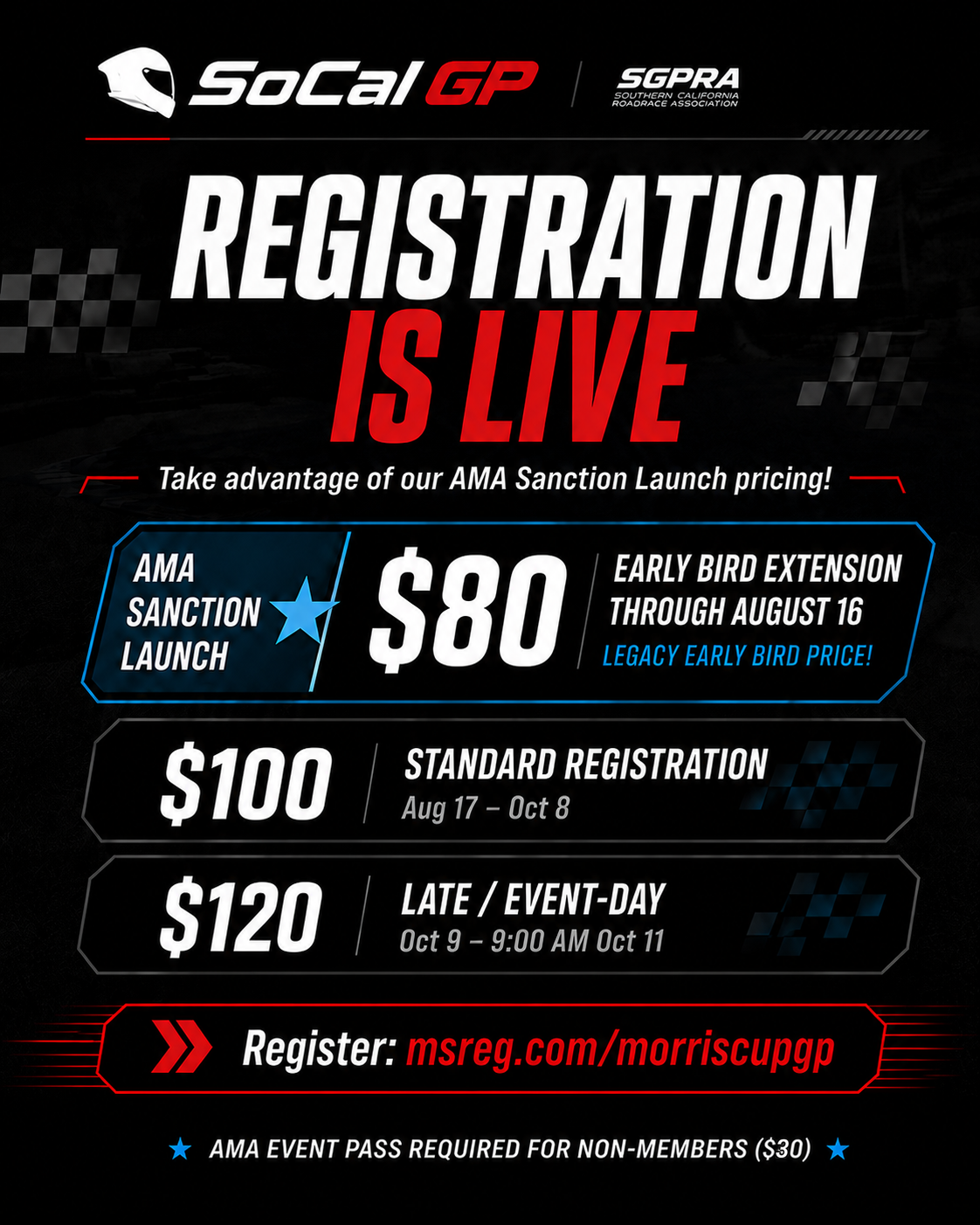
EVENT PRICING
-
$80 - Available through August 16
-
$100 - August 17 through October 8
-
$120 - October 9 through 9:00 AM October 11
-
$20 - Anytime
-
$20 Gate Entry Fee (per entrant, not covered by race entry)
$35 Overnight Camping (per space) -
All Morris Cup competitors must hold a current AMA membership or obtain an eligible AMA Event Pass before their competition entry can be accepted. Membership status will be verified during event check-in.
$30 AMA Single-Event Pass
$49 AMA 1 Year Membership
Lock in early-bird entry before July 31
AMA Membership Required to Race
Pre-registration is expected for all racers and helps race direction focus on timing, scoring, race flow, and the on-track program.
OFFICIAL EVENT SCHEDULE
Morris Cup Grand Prix · October 9–11, 2026
Tap or click a schedule image to view it larger, or download the PDF for offline reference.


BIKE Categories

Riders register by bike class, but on-track running groups are organized within three main bike categories:
-
Motorized bicycle-based machines carrying forward the original roots of SoCal GP racing.
-
Small-bike race platforms including minimoto, supermini, pit bike, Ohvale GP-style machines, production-derived lightweight street sport/road motorcycles, and similar builds.
-
Supermoto-style motorcycles and converted dirt-bike platforms prepared for kart-track, road-course, and mixed-surface racing.
This lets the event welcome a wider range of machines while still keeping sessions organized, readable, and competitive.
See where your machine fits.
Bike Classes: What Should I Register For?
Riders register by bike class, but on-track running groups are determined by actual lap times from practice and qualifying.
Your bike class is used for registration, scoring, awards, and organizing machines within the correct bike category. Your running group is determined by pace.
Youth riders should register by machine type, but final youth/adult-mixed placement will also consider age, experience, lap times, and safety.
Not sure which class fits your machine? Review the full Bike Class descriptions before registering. Unusual or heavily modified machines may require pre-event review. Website descriptions are summaries; the published SGPRA Rulebook, Morris Cup Supplemental Regulations, incorporated class rules, and official bulletins control final eligibility.
-
For combustion-powered motorized-bicycle race machines retaining genuine pedal propulsion and a qualifying bicycle-derived or purpose-built BicycleMoto chassis.
The BicycleMoto Bike Family includes the following classes:
ChinaGirl Series
ChinaGirl Super Stock
ChinaGirl Super Sport
ChinaGirl Superbike
Formula Series
Formula 1
Formula 2
Formula 3
Predator 212 Spec
212 Spec
These classes preserve the motorized-bicycle racing roots of SoCal GP while providing defined competition categories for recognizable ChinaGirl, Formula, and Predator 212-based race machines.
-
For combustion-engine small-bike race platforms prepared for paved kart-track and small-course Road Racing, including stock youth machines, street minis, production-derived lightweight street sport/road motorcycles, scooter and commuter platforms, MiniMotard conversions, purpose-built MiniGP motorcycles, and approved MiniMoto-scale outliers.
The MiniMoto Bike Family includes the following classes:
Stock 50
Stock 110
Street Mini
Sport Mini
Auto Mini
MiniMotard
MiniGP
MiniMoto Open
These classes organize the wide range of MiniMoto race machines by recognizable platform type and construction.
-
For supermoto-style motorcycles and converted motocross or off-road motorcycles competing under the applicable SGPRA and AMA Supermoto technical framework.
The Supermoto Bike Family includes the following classes:
Supermoto 250
Supermoto 450
Supermoto Open
These classes organize eligible Supermoto machines under the applicable engine-displacement and cylinder-configuration categories.
Supermoto sessions and Running Groups at the 2026 Morris Cup Grand Prix will use an integrated asphalt-and-dirt course configuration incorporating the existing Apex Motorsports Park dirt section. Applicable SGPRA and AMA Supermoto rules continue to control.
Explore the full details for every Bike Class.
Running Group Structure
Each bike category uses the same basic running group structure. The fastest lap-time group becomes the GP group, followed by Moto 2, Moto 3, and additional Moto groups as needed based on rider count, lap times, safety, and event flow.
These running groups are based on actual pace during the event. Riders still register by bike class and remain eligible for applicable bike-class awards.
-
The GP group is the premier category within each bike category, representing the fastest lap-time group and the highest overall pace at the event.
This group is intended to run on track by itself so the fastest and most skilled riders in that category can race in the cleanest possible session, with reduced lap-traffic risk and the strongest possible front-group battle.
BicycleMoto GP
MiniMoto GP
Supermoto GP -
Moto 2 is the intermediate group within each bike category and represents the next lap-time group after GP.
Moto 2 gives riders a competitive place to race against others running similar pace while continuing to build racecraft, sharpen consistency, and work toward the premier GP category.
Depending on rider count, lap-time spread, safety, and event flow, Moto 2 may run by itself or may be combined on track with adjacent Moto groups while still being recognized separately where applicable.
BicycleMoto Moto 2
MiniMoto Moto 2
Supermoto Moto 2 -
Moto 3 serves as the entry-level race group within each bike category, with additional Moto groups created as needed when field size and lap-time spread require more separation.
These groups give developing riders a meaningful place to race against others at similar pace while reducing avoidable closing-speed differences. Race direction may combine or separate Moto groups based on timing data, safety, rider count, and the overall event schedule.
BicycleMoto Moto 3
MiniMoto Moto 3
Youth MiniMoto 3
Supermoto Moto 3
How Lap-Time Running Groups Work
SoCal GP uses actual lap times from practice and qualifying to sort riders into running groups. The goal is cleaner sessions, safer closing speeds, fewer avoidable lap-traffic situations, and better racing for every entrant.
Each bike category runs within its own structure. The fastest lap-time group in each category becomes the GP group, followed by Moto 2, Moto 3, and additional Moto groups as needed.
Practice and qualifying times may be used to refine rider placement as the event develops. Final running group placement and race structure are determined by race direction using official timing data, event flow, safety, and competitive balance.
-
Because two bikes in the same class may not run the same pace on race day. SoCal GP sorts riders by actual event pace, not just machine type, license status, or self-selected amateur/expert categories.
-
Yes. If a rider finds pace during practice or qualifying, race direction may move that rider into the appropriate faster lap-time group.
-
Riders may register for more than one bike class. Entries in different bike categories, such as BicycleMoto and MiniMoto, are treated as separate on-track structures and should not create a same-running-group conflict. However, one rider cannot race two bikes in the same on-track running group. If multiple registered bikes qualify into the same running group within the same bike category, the rider must choose one bike to race in that group. Duplicate entries in the same running group are not eligible for refund or credit.
-
Race direction makes final running group and race structure decisions using official timing data, event flow, safety, rider count, and competitive balance.
Pace sorts the grids. Registration gets you in the system
Youth Riders + Age Group Placement
SoCal GP welcomes eligible youth racers, developing riders, adult racers, and veteran competitors. Riders register by the Bike Class that matches the actual machine they will race; age does not automatically create a separate Bike Class or determine a rider’s on-track Running Group.
Youth placement is handled as an additional eligibility and safety layer within SoCal GP’s pace-based Running Group system. Race Direction may consider demonstrated pace, consistency, rider control, passing behavior, machine performance, closing speed, track density, age and Youth eligibility, physical rider/machine compatibility, and overall safety when assigning or revising a rider’s Running Group. Lap time matters, but lap time alone does not guarantee placement.
Youth-only Running Groups may be used where appropriate. Otherwise eligible Youth-category and Adult-category riders may share a Running Group only when permitted by the applicable rules and when Race Direction and the AMA Referee determine that the riders and actual machines are compatible. Mixed placement is never automatic.
-
Youth status does not change a rider’s Bike Class. Riders register according to the actual competition machine, while Running Groups control who shares the track.
A Youth rider may therefore remain scored in the same Bike Class as other eligible riders while being assigned to a different Youth, protected, or mixed Running Group for practice, qualifying, or racing. Moving between Running Groups does not change Bike Class registration, class eligibility, championship points, or class-award eligibility.
This is the cleanest place to reinforce your central doctrine:
Register by machine. Race by pace.
-
SoCal GP may use dedicated Youth MiniMoto Running Groups when entries and rider needs justify them. These may include Youth Development, Youth MiniMoto 3, Youth MiniMoto 2, and Youth MiniMoto GP. These are on-track placement groups—not separate Bike Classes.
Youth Development is the most protected placement environment. It may be used for an eligible rider who benefits from reduced closing speeds, lower track density, additional observation or coaching, controlled passing, or other special session management.
Stock 50 riders ordinarily begin in Youth Development, with a strong protected-placement presumption for ages 6 and 7. An age-8 or advanced Stock 50 rider may receive another placement only after affirmative Race Direction review. Stock 110 riders may be placed into any compatible Youth MiniMoto Running Group.
For the Morris Cup specifically, the anticipated framework expressly includes those four Youth MiniMoto groups, while Race Direction retains authority to combine, divide, rename, reassign, create, or discontinue groups based on the actual event.
-
Youth riders are not automatically excluded from every Adult-category Running Group, and reaching a particular age or lap time does not automatically guarantee mixed placement.
An otherwise eligible Youth-category rider may share a Running Group with Adult-category riders only when the applicable sanctioning and event rules permit it and when Race Direction and the AMA Referee determine that the actual riders and machines are compatible.
The review may consider:
demonstrated pace and consistency;
rider control and judgment;
braking and passing predictability;
machine acceleration and top-speed profile;
closing speed;
rider count and track density;
physical rider/machine compatibility;
course configuration; and
overall safety.
If mixed placement is unavailable or inappropriate, separate Youth and Adult Running Groups are used without changing the rider’s Bike Class.
-
A rider must first be eligible for the actual machine they intend to race. Running Group discretion cannot make an otherwise age-ineligible rider or machine eligible.
Under the current standing SGPRA framework, subject to any stricter class-specific or sanctioning rule:
riders must be at least 12 to ride a motorcycle above 86cc;
riders must be at least 14 to ride a motorcycle above 250cc; and
riders must be at least 17 to ride a twin-cylinder motorcycle.
The actual competition machine controls the applicable displacement and cylinder-count age determination—not the largest engine theoretically permitted by the Bike Class.
Some Bike Classes also have their own age structure:
BicycleMoto: minimum age 14;
Stock 50: ages 6–8 only;
Stock 110: ages 8–12 only;
SoCal MiniGP: machine-specific minimum ages apply;
SoCal Supermoto: minimum age 16, with minimum age 17 for twin-cylinder motorcycles.
Always check the Bike Class requirements for the specific machine being entered.
-
“Youth Rider” and “Minor Rider” are not the same thing.
Within the current SGPRA Track Racing system, Youth treatment generally applies through age 16 unless a controlling rule provides otherwise. An Adult-category rider is generally age 17 or older, subject to the applicable Bike Class and actual-machine eligibility.
A Minor Rider, however, is any rider below the applicable state age of majority. This means a rider may be entered in an Adult-category competition structure while still remaining a legal minor for event documentation and parent/guardian requirements.
All minor riders must satisfy the applicable AMA and event requirements for proof of age, releases, parent or legal-guardian authorization, authorized-adult provisions where applicable, required presence, documentation, and rider eligibility before participating on track.
-
Initial placement is not permanent. Practice, qualifying, and observation give Race Direction additional information about the rider and machine.
Race Direction may promote a rider, return a rider to a protected group, change a Youth/Adult placement, or remove an unsafe rider/machine combination from on-track activity based on official timing, observed rider control, compatibility, closing speed, track conditions, or other safety factors. Passing Technical Inspection or recording a particular lap time does not guarantee a particular Running Group.
For the Morris Cup, Friday practice and Saturday qualifying are expressly available for reassignment based on observed pace and compatibility.
Live Timing + Race Operations
The Morris Cup GP will use SGPRA live timing infrastructure at Apex Motorsports Park, including passive RFID timing tags and official timing/scoring support.
This system helps support cleaner session management, qualifying, results, running group placement, and overall race-day flow.
The goal is to give racers a more organized event experience while helping race direction make better decisions with real timing data.
Better timing. Cleaner grids. Stronger race weekends.

Passive RFID Timing Tags
Riders will use assigned timing tags to support live timing and session tracking.
Official Timing + Scoring
Timing data supports qualifying, results, race organization, and post-event records.
Running Group Placement
Lap times help race direction sort riders into cleaner, more competitive running groups.

Race-Day Flow
Better data helps support smoother sessions, clearer grids, and stronger event operations.
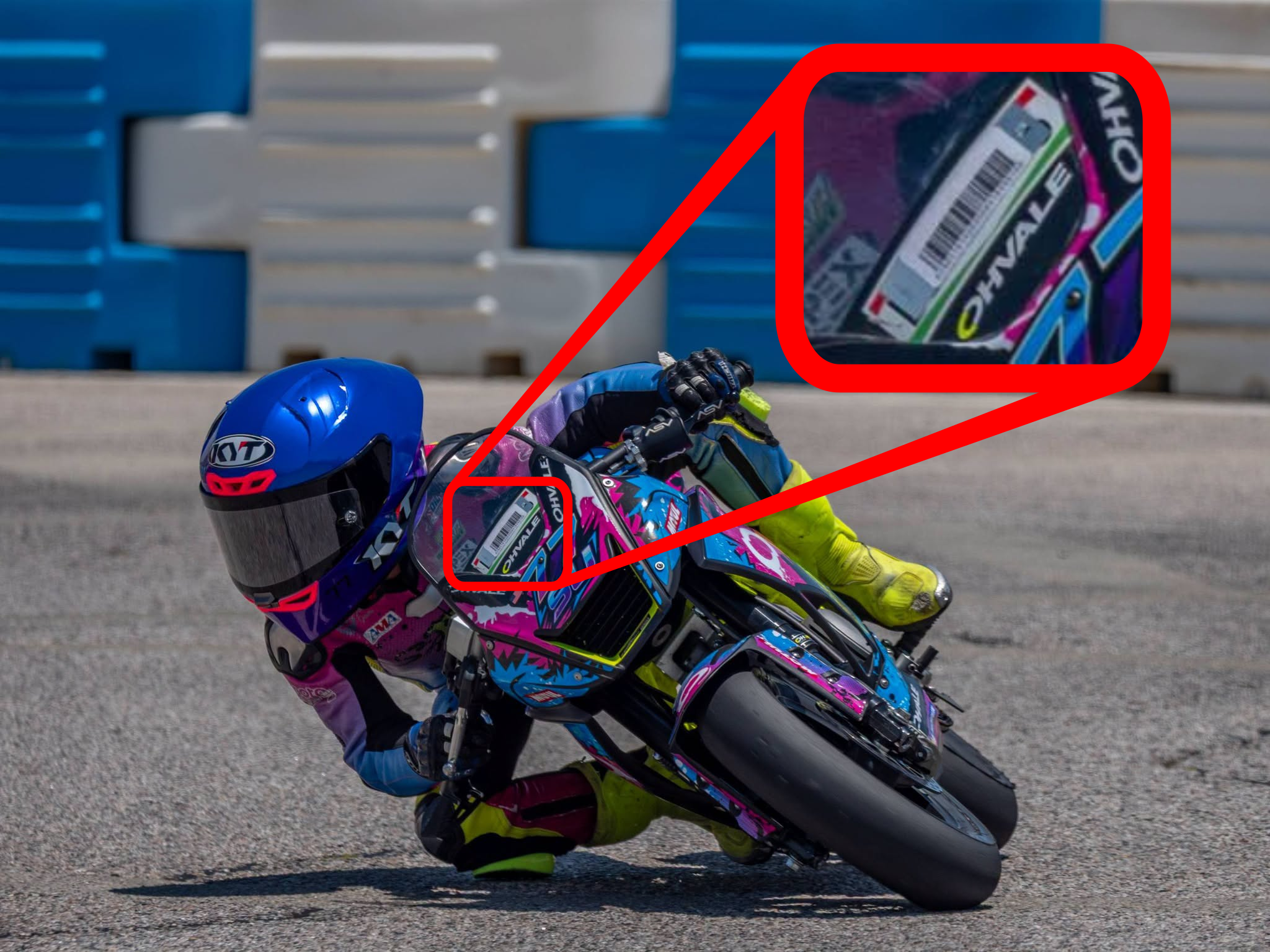
Passive RFID timing tags support official timing, qualifying, results, and running group placement.
Timing tags and placement instructions will be handled by race direction during event operations. Racers should watch for event updates and follow all timing/scoring instructions on race day.
Ready for live timing, cleaner grids, and a stronger race weekend?
Awards + Race Weekend Experience
Qualify. Race. Stand on the podium. Be part of the show.
SGPRA is building the Morris Cup GP as more than just track time. The goal is a full grassroots Grand Prix-style race weekend with practice, qualifying, Sprint races, Grand Prix Main Events, live timing, race-day media, podium moments, and a stronger show for racers, families, sponsors, and spectators.

Official qualifying recognizes the fastest performances of the weekend, with select designated bike classes earning SGPRA tachymeter/chronograph Pole Position watch awards.
Pole Position Awards

GP groups, Moto groups, and applicable bike-class results will be recognized across the event structure, giving racers meaningful battles and podium targets throughout the field.
Podium Recognition

SGPRA will continue building event coverage through photos, video, rider features, race recaps, podium moments, and post-event media.
Media

As event operations allow, SGPRA may bring back livestream coverage, parc fermé-style post-race presentation, podium interviews, and other race-day show elements.
Livestream
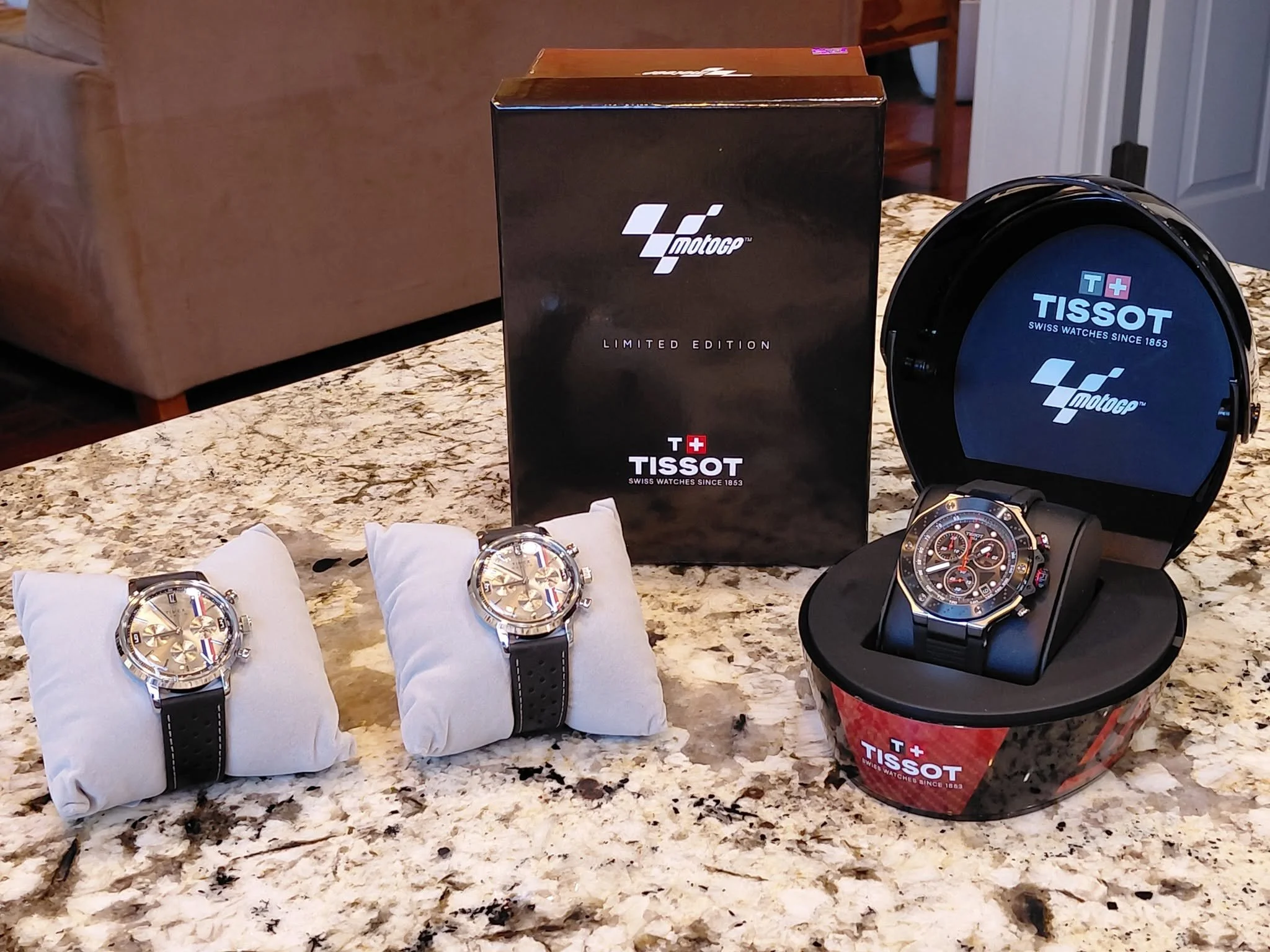
Pole Position Awards
Official qualifying will include SGPRA Pole Position Awards for designated bike classes, recognizing the fastest qualifying performances of the weekend. Pole Position has become one of the signature achievements of SoCal GP racing, with select classes receiving tachymeter/chronograph watch awards for setting the pace in qualifying.
Get on the entry list. Lock in the early-bird price. Let’s build the grid.
Safety Gear
Required gear will be enforced. Riders who arrive without required safety equipment may not be permitted on track.
Limited rental gear may be available through the Apex Pro Shop; riders should contact Apex directly in advance to confirm availability, sizing, and pricing.
Supermoto: SoCal Supermoto 250, 450 and Open follow the applicable 2026 AMA Competition Apparel requirements. See the current Morris Cup Supplemental Regulations for the controlling event provision.

Race Helmet
DOT or Snell rated helmet required.

Full leather racing suit required. Two-piece zip-together suits are acceptable.
Leather Suit

Motorcycle-type riding or racing gloves required.
Riding Gloves

Motorcycle-type riding or racing boots required.